Configuration points
- Mash preparation and feed consistency before the first belt
- Belt material, pressure stages and juice/press-cake collection
- Belt washing, accessible roller guards and wet-area drainage
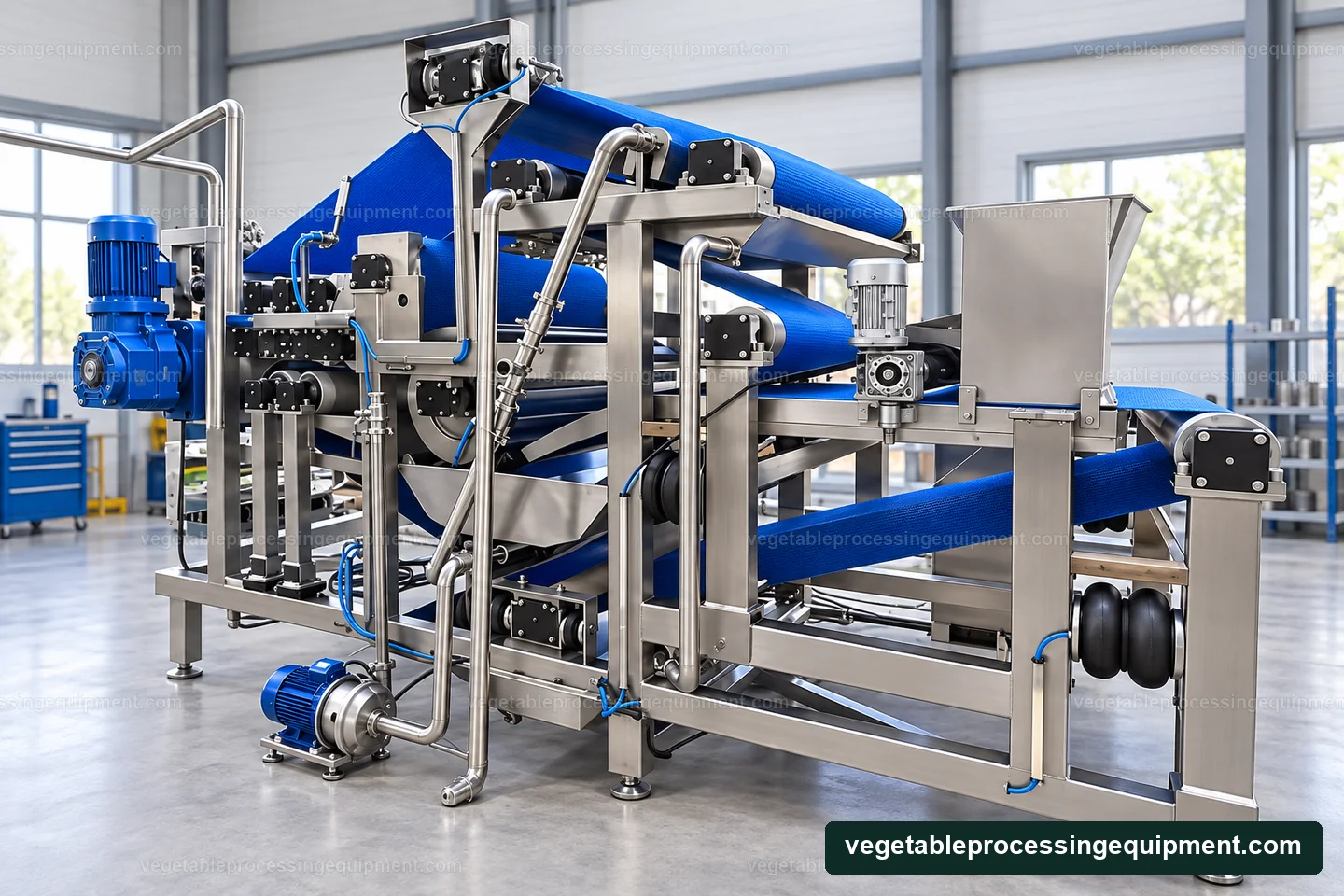
Separate liquid from suitably prepared vegetable mash through moving filter belts.
Equipment-reference presentation imageThe equipment reference shows a continuous belt-press frame with porous belts, rollers, a feed zone and liquid-collection path. It is relevant to a vegetable juice route when the vegetable can be reduced to a pressable mash and a sample trial supports the desired extract.
The photograph is a refined presentation from a sourced machine reference. Final dimensions and machine configuration are established in the quoted specification.
Mash is spread onto the belt and passes through staged pressure. Juice drains through the belt into a collection channel while spent solids leave on a separate route. Belt loading, particle size, fibre and moisture all change the attainable yield.
Requires a suitable crusher or mash preparation step; the collected juice may need filtration, buffer holding and thermal treatment. A carrot-puree route may bypass pressing and use pulping instead.
Belts, rollers, trays and splash guards require a cleaning method and inspection access. This open pressing path should not be described as fully cleaned by the closed-pipe CIP skid alone.
Presentation image derived from a photographed industrial belt press. Vegetable-specific extraction yield, belt width and rated throughput require a verified trial or technical sheet.
Tell us the material, required output, available utilities and preferred package. Those details establish the specification; they are not prerequisites to first contact.
Ask about this machineA juice route starts with defined raw material and ends with a product, package and storage condition that have been validated together. Pressing is suitable only after feed preparation and a representative extraction trial.
View details