Conveying
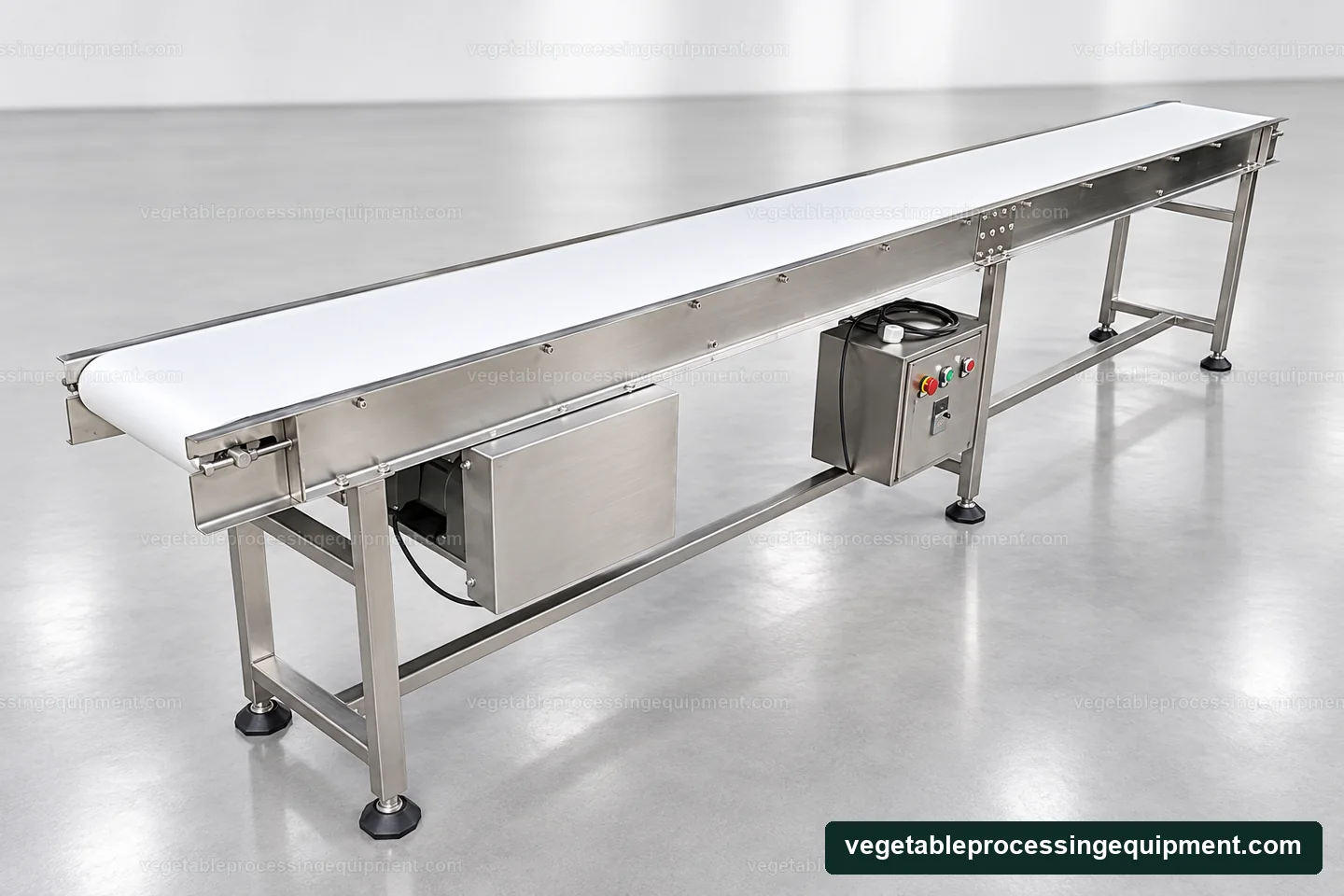
Vegetable Belt Conveyor
Carry and present prepared vegetables between receiving, inspection and washing.
Explore equipmentUnderstand transfer and washing duties before choosing front-end vegetable equipment.
This is usually a sequence question rather than an either/or choice: the conveyor presents a controlled bed to the washer, and the washer discharges to inspection or preparation. Problems often come from an uncontrolled drop, a belt that runs faster than the washer can accept, or a washer outlet that floods the next belt.
A conveyor is not a grading table and a brush washer is not a destoner. If stones, rotten product or foreign matter are present, define a pre-sort or destoning step. If the product needs peeling or cutting, specify those machines separately rather than adding more brush passes.
| Selection point | Belt Conveyor | Brush Washer |
|---|---|---|
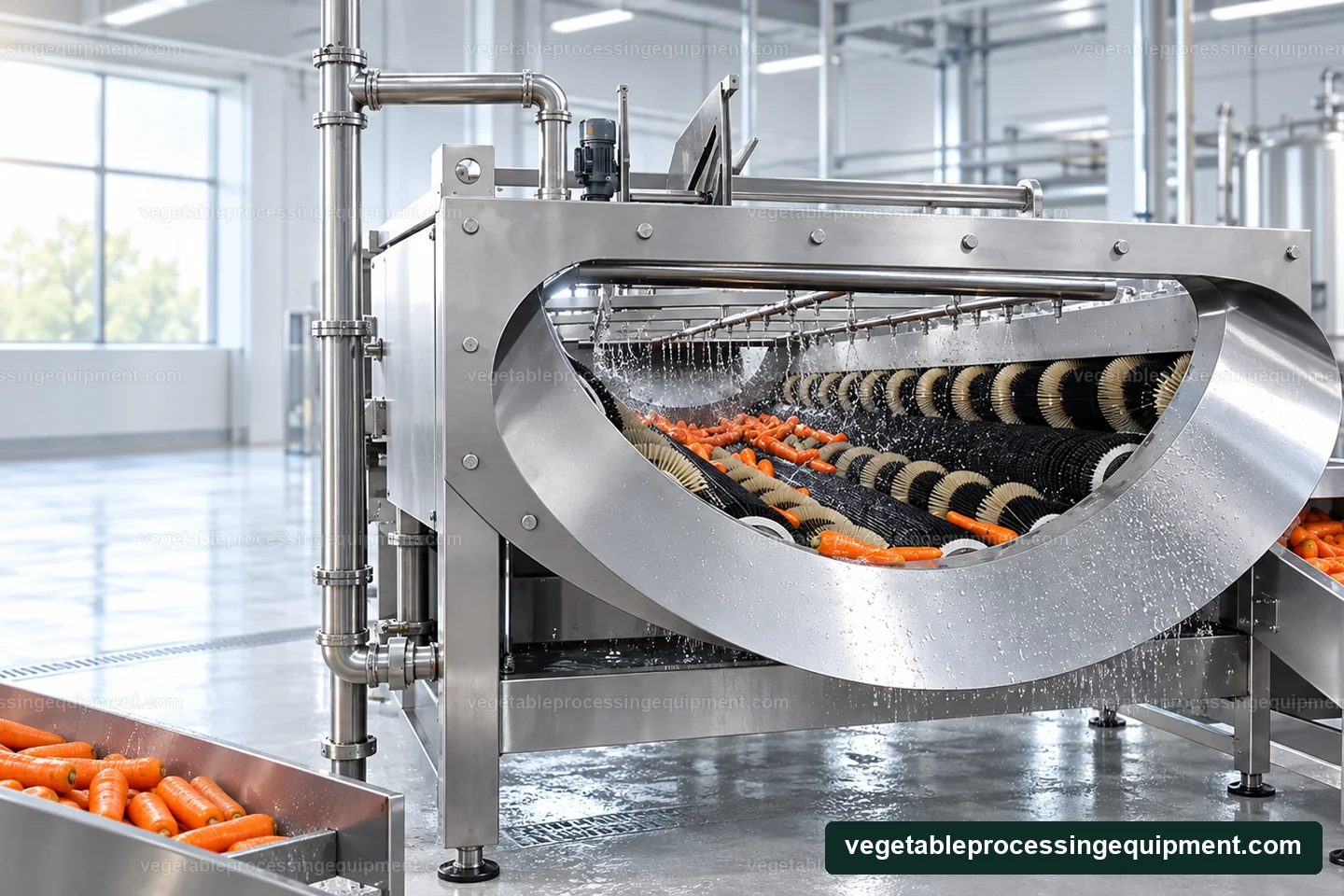
| Main function | Carry and present the product | Scrub surface soil with brushes and sprays |
| Working element | Moving food-contact belt | Rotating brush bed and spray distribution |
| Selection inputs | Belt width, length, speed and transfer heights | Root sizes, skin condition, soil and dwell |
| Cleaning access | Return belt, edges and frame | Brushes, nozzles, drains and splash zones |
| Connection | Controlled feed to the next machine | Cleaned product to inspection or preparation |
These machines usually complement each other rather than substitute for each other. Choose the conveyor to control feed and match elevations; select the washer against the actual soil-removal duty and product condition.
Discuss the right selectionCarry and present prepared vegetables between receiving, inspection and washing.
Explore equipmentRemove surface soil with rotating brushes and spray water before extraction or pulping.
Explore equipmentOnly with a controlled receiving arrangement. A direct tip can surge the washer and make brush contact uneven. A hopper, feed belt or metering device is usually needed to present a consistent bed.
No. Dwell in the washer is set by the brush bed and roller speed. A longer conveyor only changes transfer distance and residence on the belt; it does not replace washing contact.
Not usually. Heavy soil and stones need a separate removal and drainage assessment. The brush washer can then remove adhered surface soil, but it should not be described as a complete soil-removal system.