Sorting and grading are preparation duties. The current single-machine range does not list a dedicated sorter or optical grader. Define the duty, reject handling and throughput basis with the line so any sorter, inspection table or grader is quoted as a named scope item rather than assumed to be part of the washer.
Start with the defect list
Write down what must be removed: stones, soil clods, rotten or damaged product, undersize pieces, foreign matter and any material the buyer rejects. Each class may need a different presentation, detection method and reject lane. A single conveyor with people standing beside it is not a grading specification.
Choose the grading basis
Grading can be by size, weight, density, colour or visual defect. Roller or screen sizing suits a narrow size range; weight or optical systems may suit a quality grade. Throughput changes with singulation, recirculation and the share of product sent to a second pass, so give a feed basis rather than an assumed finished rate.
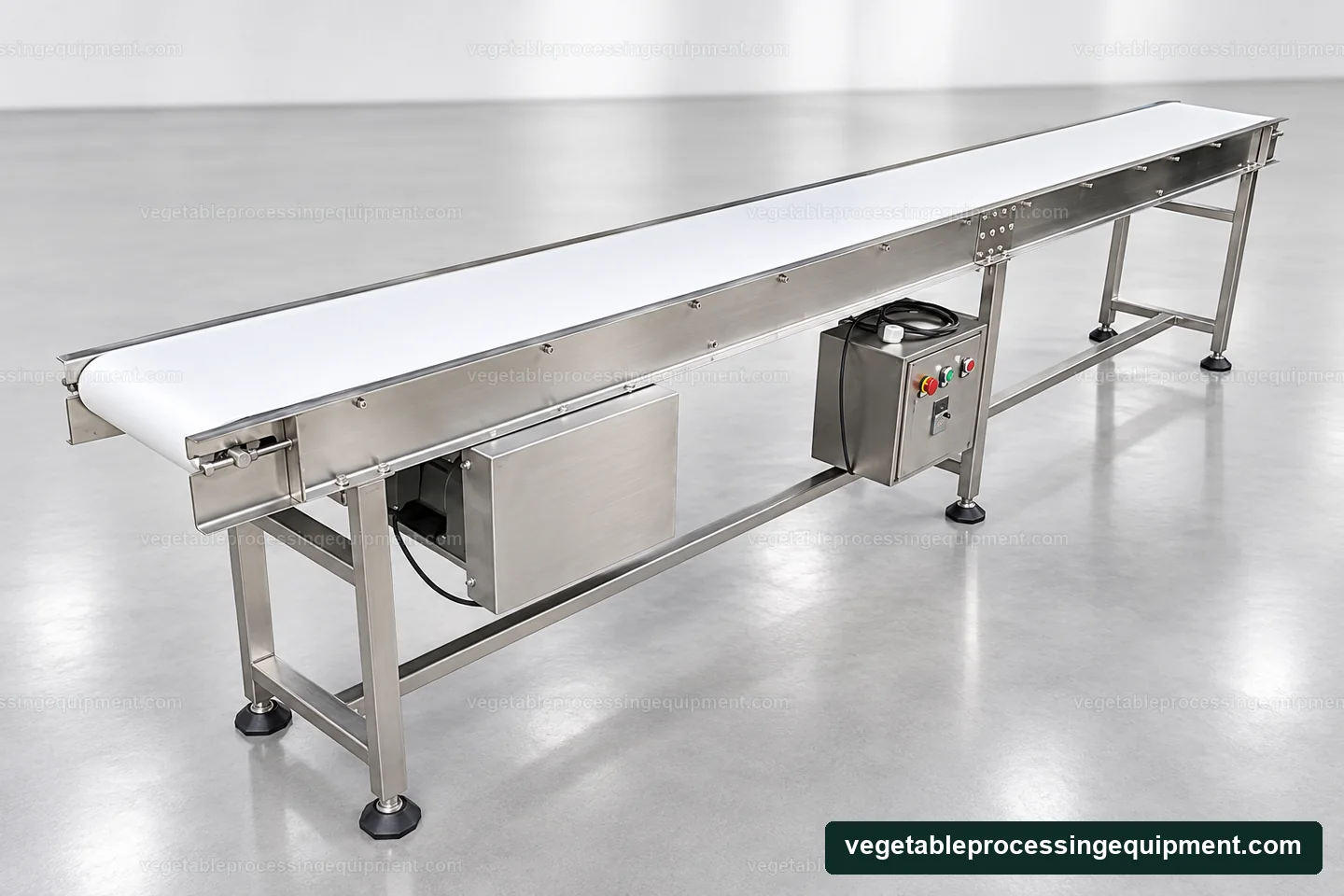
Design the inspection point
Product should be presented in a single layer at a controlled speed, with shadow-free light and safe access from both sides where needed. Define the reject lane and how rejected product is recorded. Human inspection has attention limits; do not describe it as complete removal of every defect.
Connect washing, grading and preparation
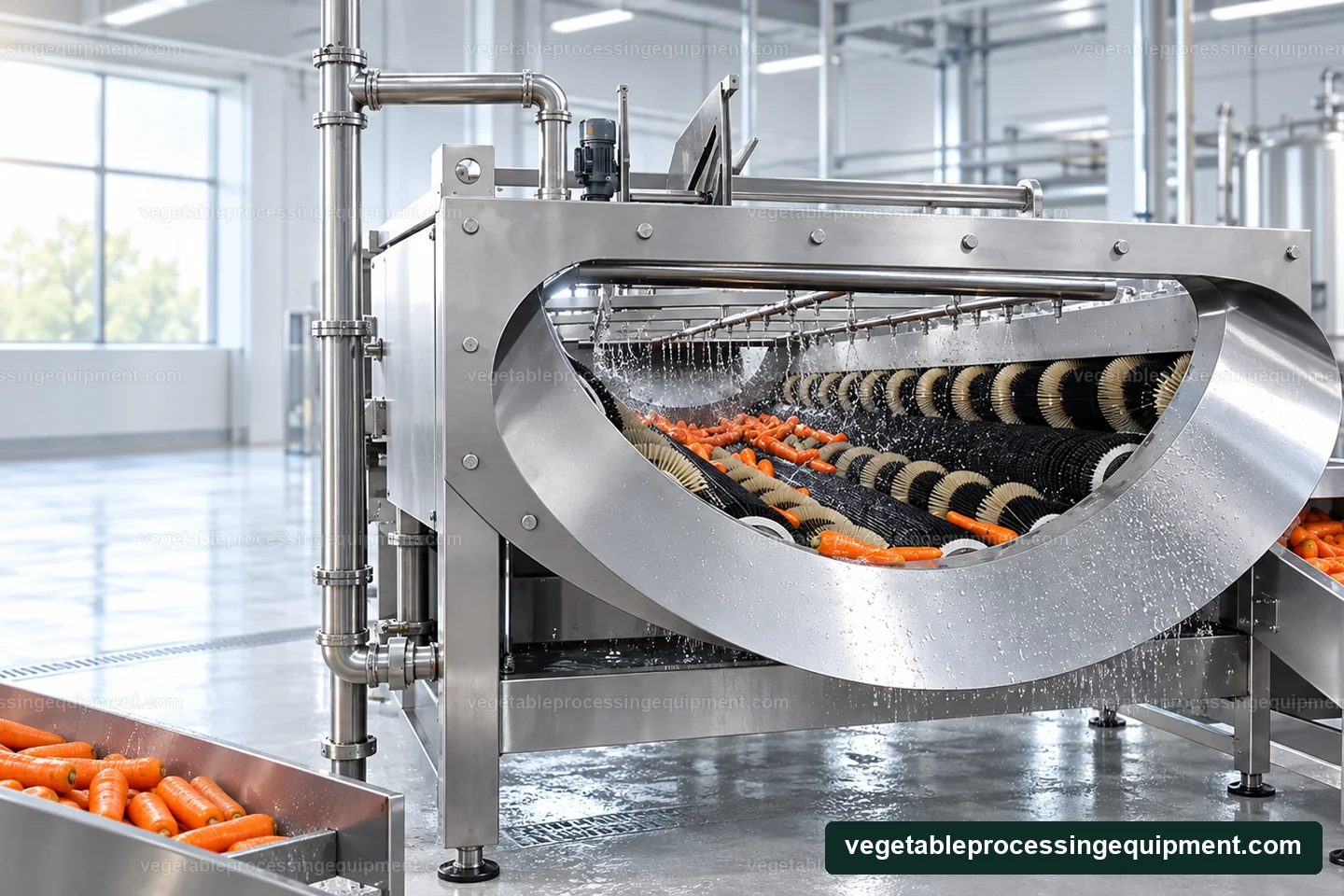
A practical order is receive, pre-sort, wash, post-wash inspection, grade, then peel or cut. Reject and waste streams must not re-enter the product path. A buffer before the washer can steady the feed, but it cannot correct a permanent mismatch between receiving and washing capacity.
What to send for a quotation
Send the vegetable, incoming size range, expected defect and soil load, required grade, throughput basis, available floor space and the existing machines before and after the inspection point. A sample of the actual feed is more useful than a description alone.
What to prepare
before the quotation.
- List every defect and foreign-matter class to be removed
- State the size or quality bands and the target grade
- Give throughput on a defined feed basis, including recirculation
- Show the inspection position, lighting and reject lane
- Agree who verifies grade and what sample is used