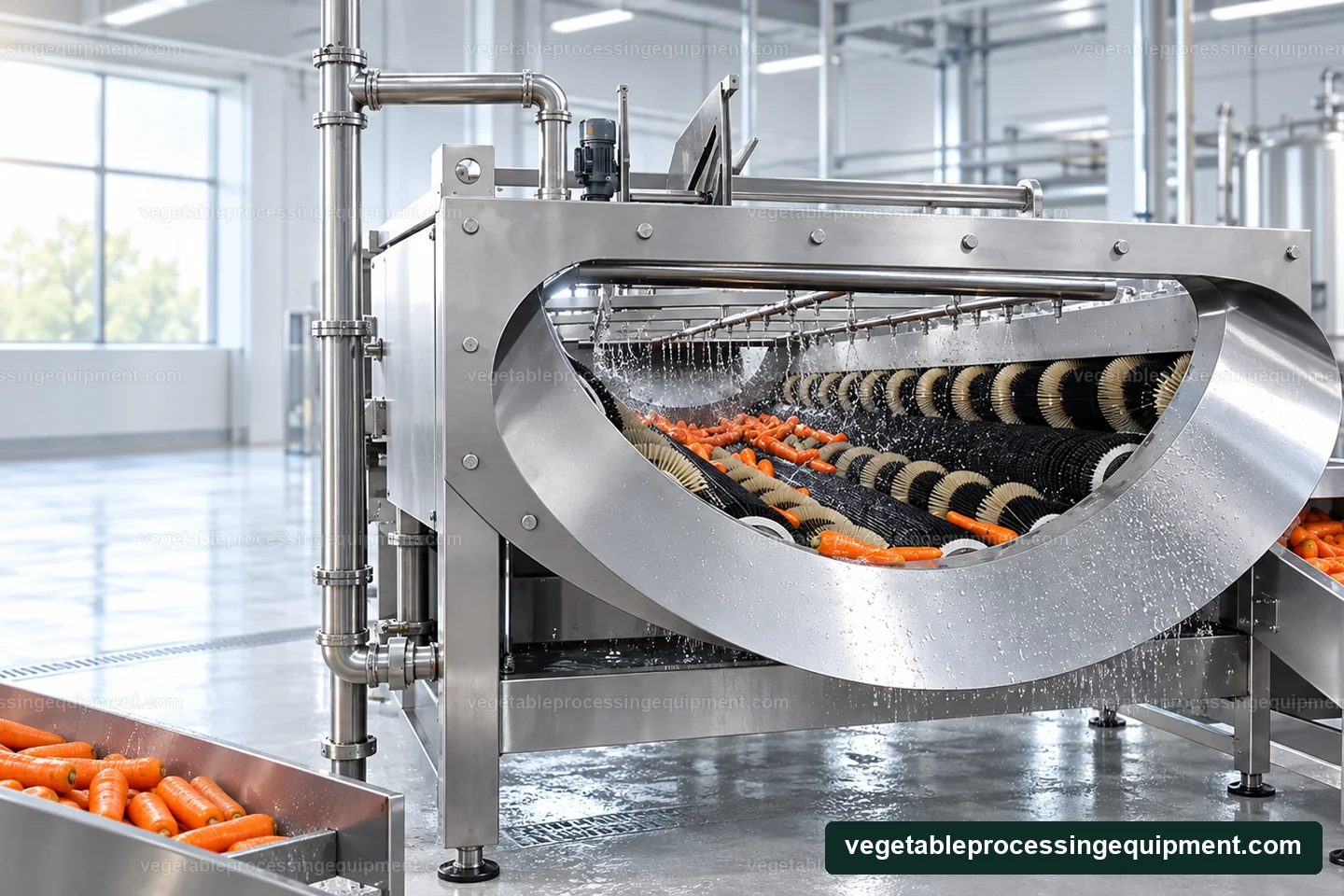
A peeler is a separate preparation machine. The current listed range does not include a peeler; define the peeling duty, peel-loss target and waste stream before the pulper or press is sized. Peeling performance must be demonstrated on the actual vegetable and condition.
Peeling is not a washer setting
Peeling changes the mass, surface, texture and waste load of the product. It also creates a new food-contact surface that must be protected before cutting, pressing or pulping. Define the required peel removal and the acceptable loss before comparing machines.
Compare methods by product and cut
Abrasive systems suit many firm roots but can damage irregular shapes. Knife peelers can follow difficult shapes but need sharpness and gap control. Steam and chemical methods have different heat, wastewater and control implications. No method is universal; the product, cut and downstream duty decide.
Measure peel loss and product damage
Agree a trial with weighed feed and peeled output, then inspect residual peel, cut damage and surface quality. Include the cost of trim labour, wastewater treatment and lost yield. A machine that peels quickly but damages the product can be the more expensive choice.
Connect to cutting and pulping
Peel before or after cutting according to the product and the downstream machine, but define the hold time, temperature and sanitation between steps. Peel waste must leave the product area promptly. The pulper or press should be sized after the peeling result is known, not before.
What to send for a quotation
Send the vegetable, size and shape range, target peel, throughput basis, intended cut or pulp, wastewater constraints, available utilities and a sample of the incoming load. State whether the peeler is a new machine or part of an existing line.
What to prepare
before the quotation.
- State the vegetable, shape and size range
- Define acceptable residual peel and peel loss
- Choose a method only after a representative trial
- Plan peel waste, wastewater and drainage
- Confirm the hold time and temperature before cutting or pulping