Mixing and holding
Vegetable Mixing & Buffer Tanks
Blend soup bases and sauces or buffer juice and puree between process steps.
Explore equipmentSpecify what happens inside the vessel before selecting working volume, agitation and heating.
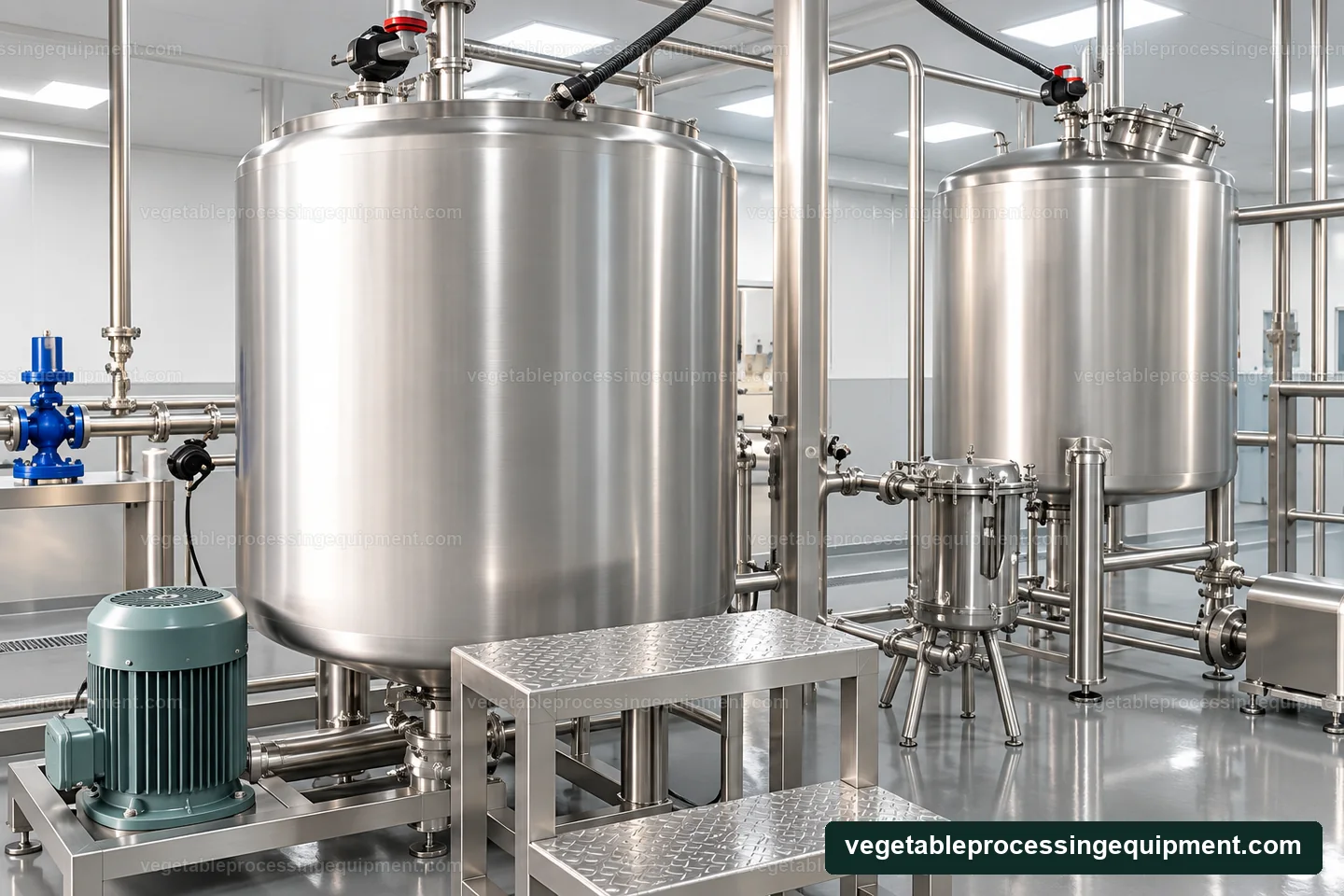
A buffer tank is sized by the variation it must absorb and the hold condition, not by the batch recipe. A mixing tank is sized by the batch, the ingredient addition sequence and the time needed to reach a uniform product. Using one vessel for both duties can work, but only if the agitation, cleaning and instrumentation suit the more demanding duty.
Heating changes the decision. A jacketed mixing tank may heat a batch, but it is not automatically a validated thermal process. If the product needs a defined temperature/time profile, a separate thermal skid and a validated package route may be required.
| Selection point | Mixing Tank | Buffer Tank |
|---|---|---|
| Main duty | Combine measured ingredients into a batch | Receive and feed prepared product between stages |
| Selection basis | Recipe, batch time, agitation and addition points | Upstream/downstream rate variation and hold needs |
| Heating | Selected if required by the recipe | Selected if required by the holding condition |
| Capacity basis | Working batch volume and complete cycle | Usable buffer volume and feed pattern |
| Interfaces | Ingredient addition and product discharge | Incoming transfer and controlled outgoing feed |
The same vessel appearance does not establish the same tank duty. State whether the process requires ingredient mixing, heated holding or intermediate buffering, then confirm the agitator, instruments and transfer arrangement.
Discuss the right selectionBlend soup bases and sauces or buffer juice and puree between process steps.
Explore equipmentWorking volume is the usable batch under the proposed operating conditions, allowing for freeboard, agitation and any foam. Vessel volume is a geometric number and can overstate the usable batch.
It can if the agitator, baffles and addition points are specified for mixing. A tank described only as a buffer may not have the agitation or cleaning access needed for ingredient addition.
No. A jacket can heat the product, but a validated thermal process requires a defined temperature/time history, monitoring and a compatible package route. Confirm which machine is responsible for that duty.