- Separate dirty receiving water from cleaner final-rinse and recovered streams.
- Meter fresh, recirculated and discharged water at defined points.
- Assess any reuse against the sanitation risk of the actual product and circuit.
- Use measured project data, not a generic percentage, to size treatment and drainage.
Define dirty and clean water interfaces
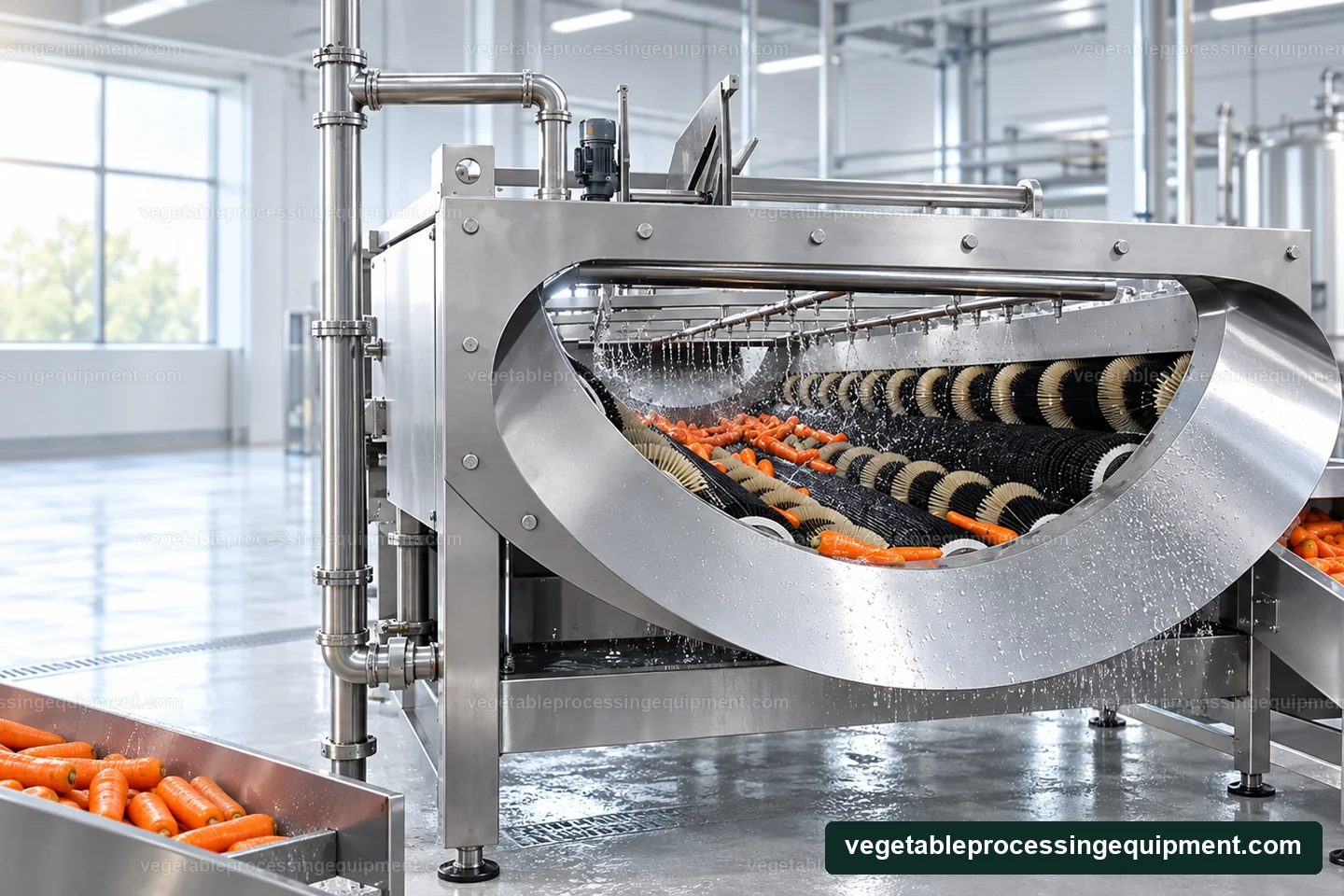
Vegetable preparation can use water for fluming, immersion, spray rinsing, brush washing, equipment cleaning and hand-washing. These duties do not produce the same water quality. Receiving and primary wash water may carry soil, leaves and stones. A final rinse may need water of a defined sanitary quality. Cleaning water may contain detergents or residues from a closed circuit. Combining all of them in one drain makes recovery and treatment harder and obscures where contamination enters the process.
The FAO juice-processing principles recommend attention to dry pre-cleaning, brushes or air jets before washing, partly because these steps can reduce water use and speed product flow. The same text warns that equipment and water sanitation are critical and that poorly performed washing can increase contamination. That is the correct frame for a water project: less water is not automatically better if the remaining water is dirty or the surface is not cleaned. FAO juice processing principles
A simple interface diagram is more useful than a single total-flow figure. Mark the points where fresh water enters, where it contacts product, where it is recirculated, where it is discharged and where cleaning chemicals are introduced. Identify which streams may be reused and which must be kept separate. The diagram should also show drains, settling or solids removal and any sample points needed to verify water quality.
Meter fresh, recovered and discharged streams
Metering should begin with the streams the project can actually control. Install meters on the main fresh-water supply, on significant recovered-water loops and on discharges that are costly or regulated. Record the meter readings with the production period and the product or cleaning cycle they serve. A total site water bill cannot tell an operator whether a washer is using more water after a nozzle change or whether a rinse step is running when the line is empty.
The measurement plan should state the accuracy needed and who reads the meters. If a meter is used to allocate cost or to demonstrate a reduction, its calibration and reading frequency matter. If it is used only for trend monitoring, a simpler device may be adequate. Do not report a percentage saving without a baseline period, the production conditions and the boundary of the measurement.
For a trial, record water added to the process as well as water used for cleaning. Water that enters a product stream changes the mass balance and may change the product specification. Water used to flush a line between products belongs to the changeover record. Separating these uses makes the water balance auditable and prevents a cleaning improvement from being mistaken for a process-yield change.
Link any reuse to a sanitation assessment
Water reuse is a process decision, not a plumbing shortcut. The FAO text notes that chlorination and recycling are often necessary but that water quality must be maintained; it does not say that recycled water is inherently safe. Reuse should be assessed for the specific circuit, the soil load, the contact time, the treatment step and the product’s sensitivity. A stream that is acceptable for a first rough wash may be unacceptable for a final rinse or a closed product circuit.
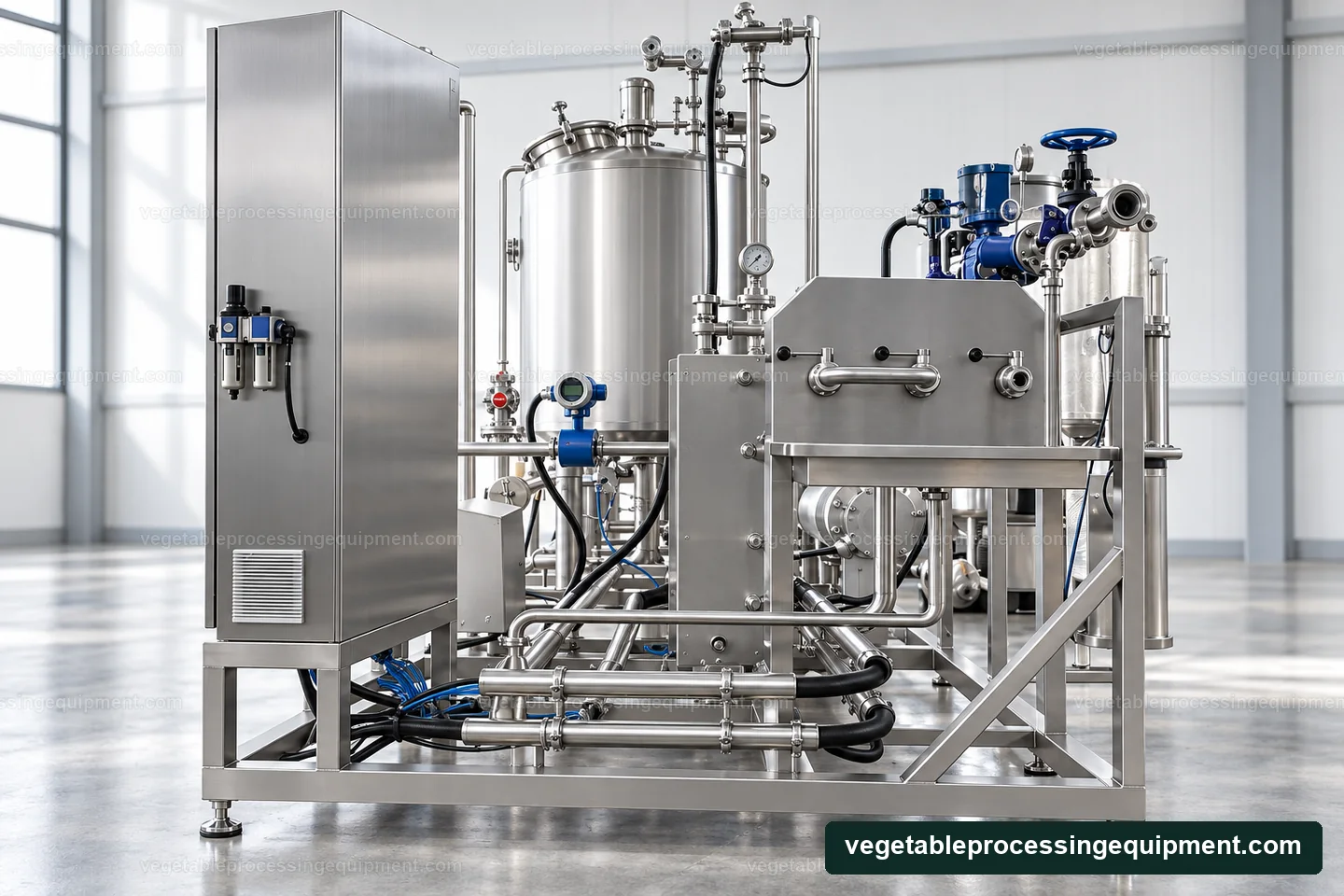
Define the treatment and monitoring that make reuse credible. Filtration, settling, chlorination or other disinfection may be proposed, but each has limits and operating requirements. The project should specify how the treatment is monitored, what happens when a reading is out of range and how the reused stream is kept from cross-connecting with a potable or final-rinse supply. Backflow prevention and clear labelling are part of the design.
The sanitation assessment should also consider the equipment. Brush beds, belts, nozzles, tanks and drains accumulate soil and biofilm if they are not accessible for cleaning. A water-reuse scheme can look efficient while creating more cleaning work elsewhere. The total burden includes the water used to clean the recovery equipment and the energy and chemicals needed to maintain the desired water quality. FAO technical manual
Use measured project evidence for decisions
The practical trend is toward measurement before optimisation. A plant that knows its fresh-water input, recovered flow, discharge and product-contact points can evaluate a change on evidence. It can compare a nozzle upgrade, a changed rinse sequence or a closed-circuit cleaning step without relying on a supplier’s generic claim. It can also see when a water reduction has shifted contamination or cleaning burden to another part of the line.
UNIDO’s small-scale processing guidance places production methods within a quality-assurance context, which is the right level for this decision. Water, sanitation, equipment condition and product handling are connected. A water project that is not linked to the sanitation plan is incomplete, and a sanitation plan that ignores water quality is equally weak. UNIDO processing guide
For an equipment enquiry, provide the water sources and intended uses, the discharge route, any reuse proposal, the cleaning chemicals, the product contact surfaces and the measurements already available. Ask how the proposed machine will be drained, cleaned and sampled. The most defensible target is not a headline percentage; it is a documented reduction in a defined stream with the product and sanitation results still meeting their specifications.
Primary guidance used
- FAO, Principles and practices of small- and medium-scale fruit juice processing, Chapter 6 Food and Agriculture Organization of the United Nations
- FAO, Technical manual on small-scale processing of fruits and vegetables (1997) Food and Agriculture Organization of the United Nations
- UNIDO, Small-scale fruit and vegetable processing and products United Nations Industrial Development Organization
External sources are linked for reference. Their publication does not constitute endorsement of this site or of any equipment configuration.